Desks & Office
Planning a Solid-Wood Home Office: Desk Storage, Scale, and Finish
A useful home office begins not with the desk you admire, but with the work you actually do—and the room you have to do it in. Dimensions, storage, and finish all matter. So does the quiet arithmetic of chair clearance, papers, cables, and the occasional cup of coffee.
A desk is a modest piece of architecture. It draws a boundary around a task, gives scattered things a place to land, and declares that one corner of the home is, for a time, somewhere else. In a dedicated office, that declaration may be easy. In a bedroom alcove, a dining-room edge, or the spare patch beside a bookcase, it has to be negotiated. The best home-office plan is therefore less about finding a grand desk than about making a series of small, practical decisions that add up to a workspace one can inhabit comfortably.
Solid wood makes those decisions feel consequential. Grain, color, joinery, and finish remain visible in a way that a purely anonymous surface does not. A well-proportioned hardwood desk can sit in a room for years, absorbing the ordinary signs of use without losing its purpose. But good material cannot compensate for a desk that blocks a doorway, leaves no room for a chair, or puts the things needed every hour beyond reach. Begin with the room and the routine. Let the furniture follow.
Begin with the room, not the catalogue
Before comparing desk styles, measure the space in which the desk will live. Record the available width and depth, then note doors, windows, radiators, outlets, baseboards, and any route people need to walk through. A tape measure is more useful here than an optimistic glance. The desk’s stated dimensions describe the furniture; they do not describe the room once a chair, a person, and the daily movement around it are included.
Depth deserves particular attention. A shallow desk may preserve a narrow passage, but it can leave a monitor too close or make paperwork feel permanently crowded. A deeper surface can accommodate a screen, keyboard, notebook, and a working margin for documents, but it may consume space that the room cannot spare. Consider the equipment first: a laptop alone asks for less real estate than a monitor, keyboard, speakers, and a stack of reference books. Then allow enough room to work without arranging every object as if it were on a tray.
Width is similarly tied to habit. Someone who writes by hand beside a laptop may want a clear area to one side. A person who works with plans, books, or paper files may need more uninterrupted surface. By contrast, a compact nook used mainly for email and a few calls may be better served by a smaller study desk than by a broad writing desk whose extra acreage becomes a landing strip for objects with no other home.
Measure the chair in use, not just the desk standing alone. Pull it back as far as you would when sitting down or leaving the workspace, and check what lies behind it. A desk can fit neatly against a wall yet make the room awkward if the chair obstructs a closet or cuts off the only comfortable path across the floor. Where possible, mark the intended desk footprint with painter’s tape. A few minutes spent walking around that outline can reveal what a product photograph cannot.
Scale is more than width
Scale has a physical and a visual side. Physically, it is the relationship between desk height, chair height, legroom, and the work surface. Visually, it is the way the desk’s mass and lines sit alongside the rest of the room. A substantial piece may feel settled in a large office and overbearing in a narrow bedroom. A light-looking desk may preserve openness, yet provide less storage than the work requires. Neither effect is automatically right or wrong; the question is whether the proportions support the room’s actual use.
A typical desk height is often around 28 to 30 inches, but bodies and chairs vary. When seated, the shoulders should be relaxed and the forearms able to rest comfortably near the level of the work surface. If a desk is too high, the shoulders may creep upward; if it is too low, the user may hunch. Check the chair’s adjustment range and the position of its arms. A desk apron, drawer, or rail underneath can also limit knee space, even when the tabletop height seems suitable.
Legroom is easy to overlook in a photograph. Examine the underside of the desk and consider where knees and feet will go. A central drawer can be useful, but its depth and placement matter if it occupies the space where the body needs to move. Likewise, a side pedestal can provide valuable storage while narrowing the area available for legs. If more than one person will use the desk, or if the arrangement may change, a simpler underside can offer greater flexibility.
In a small home office, visual breathing room can be as valuable as a few extra inches of surface. Open space beneath a desk makes the room feel less crowded; slender legs can let light and sightlines pass through. In a larger room, a desk with a more substantial profile may establish a comfortable center of gravity. Try to judge the silhouette from the doorway as well as from the chair. The workspace is experienced from both positions.
Give storage a job
Desk storage is most effective when it answers a specific question: What needs to be close at hand? A pencil drawer is designed for small tools and everyday writing supplies. Accessory drawers can hold chargers, notebooks, envelopes, or the miscellany that otherwise migrates across the desktop. A file drawer is for documents that are consulted or retained in paper form. These categories are simple, but they help prevent the familiar mistake of paying for storage that is either too small to be useful or so capacious that it becomes an archive of indecision.
Start by taking stock of the things used in a normal week. Separate them into three groups: items needed on the surface, items used regularly but not continuously, and items kept for reference or record-keeping. The first group needs a clear, reachable place on the desktop. The second belongs in a nearby drawer or shelf. The third may be better housed in a filing cabinet or bookcase than in the desk itself. This small inventory can make a compact desk more useful than a larger one chosen on the vague premise that storage is always beneficial.
A pencil drawer should be judged by access as well as capacity. If it is directly under the usual writing position, it may be convenient; if opening it requires shifting a keyboard or moving the chair, it may be less so. Accessory drawers work well for objects that need to be found quickly but do not deserve to occupy the surface. Dividers can make a drawer easier to use, though the first requirement is simply that its dimensions suit the contents. A drawer that swallows everything is not necessarily a well-organized drawer.
File storage needs a more deliberate decision. Digital work has reduced the paper many people keep, but contracts, receipts, plans, and reference documents can still accumulate. If files are part of the routine, check what sizes a file drawer accommodates and how its rails or supports are configured. A desk with an ordinary drawer is not automatically a filing solution. Conversely, if almost everything is digital, a dedicated file cabinet may take up room better used for a comfortable chair, a task light, or a clear work surface.
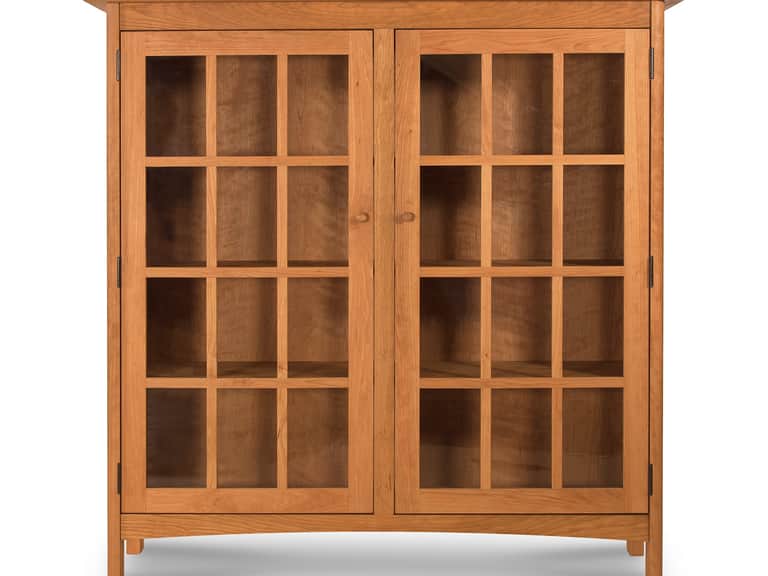
A useful desk does not have to contain every object associated with an office. A nearby bookcase can take the pressure off the desktop and keep reference material visible without turning the work surface into a shelf. For example, the Heartwood Shaker 2-Glass Door Bookcase is made from solid wood and combines enclosed glass-front storage with a natural oil finish. In a home office, that kind of piece can provide a separate place for books and selected materials, leaving the desk to serve the work in progress.
Choose a desk for the workday you have
The word “desk” covers several useful arrangements. A compact study desk can suit a small room, a secondary workstation, or a routine built around a laptop and a few papers. A broader writing desk may be more comfortable when the work involves notebooks, correspondence, reference books, or documents that must remain open side by side. The right distinction is not prestige but use. A desk should make the recurring tasks easier, not merely accommodate a hypothetical future in which one somehow needs every drawer and every inch.
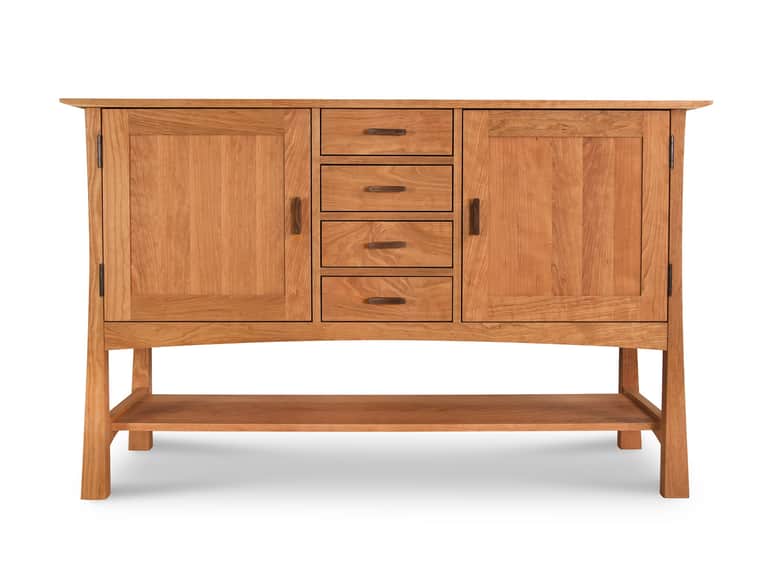
A straightforward writing desk with two drawers, such as the Contemporary Craftsman Writing Desk in the furniture collection, illustrates a familiar balance: a broad work surface with a modest amount of enclosed storage. Its stated top dimensions are 28 inches deep by 48 inches wide, a useful reminder to compare exact measurements rather than rely on labels like “compact” or “spacious.” Whether those dimensions work depends on the room, chair, equipment, and the user’s preferred arrangement.
A desk with a built-in file cabinet may suit someone whose work is still paper-heavy, while a simpler writing surface can be more adaptable for a laptop-based setup. Accessory drawers are valuable if small supplies otherwise spread across the desk; they are less essential if the daily routine involves little beyond a keyboard and a notebook. Be candid about habits. The furniture will not make a person file papers, clear a surface, or stop collecting charging cables. It can, however, make those routines easier to maintain.
Think, too, about the equipment that may arrive later. A monitor arm needs a suitable edge and enough clearance. A printer may need its own stable surface, since placing it on a desk can crowd the work area and introduce vibration. Cables need a route to outlets without stretching across a walking path. These are not glamorous considerations, but they are the difference between a room that functions and one that looks organized only when photographed.
Wood and finish: the room’s quieter decisions
Solid wood brings natural variation to a desk. Grain patterns, color shifts, and small differences between boards are part of the material rather than defects to be erased. Cherry, maple, and walnut, for instance, each have their own appearance and character. The same species can also vary from one piece to another. If a desk is meant to sit beside existing furniture, compare the overall warmth and depth of the woods rather than expecting a perfect match. A room can accommodate contrast; it tends to resist accidental imitation.
Finish changes how that wood is seen and maintained. A natural oil finish can bring grain and color forward while leaving a relatively understated surface. In the furniture described in the collection, oil finishes are used to protect the wood and enhance its natural appearance. The result depends on the wood and the particular finish, so it is worth asking how the maker describes care, cleaning, and periodic maintenance. “Natural” is a description, not a care instruction.
A desk is a working surface, which means it will meet pens, cups, hands, sunlight, and the occasional object set down with insufficient ceremony. Use a coaster for drinks, wipe spills promptly, and follow the maker’s recommendations rather than experimenting with strong cleaners. A finish that looks beautiful in a showroom still has to live with ordinary use. Before choosing, consider whether you prefer a surface whose grain is especially visible, how much upkeep you are willing to undertake, and whether the desk will sit in direct sunlight or near a heat source.
Hardware can supply a small but effective contrast. Walnut pulls, for example, appear on some Arts and Crafts-style desk designs and can give a lighter wood a distinct accent. The detail need not match every other piece in the room. It can instead act as a punctuation mark, tying together a desk’s lines without insisting that the whole office be coordinated. The aim is coherence, not a furniture set assembled under one strict color rule.
Make a plan before placing an order
Furniture made to order requires patience and a little more certainty. Before committing, confirm the desk’s dimensions, available wood choices, storage configuration, finish, and estimated production time. Ask about details that affect daily use: interior drawer dimensions, file compatibility, clearance beneath the apron, and whether any options alter the overall footprint. If a desk can be customized, customization is most useful when it solves a clear problem—a particular room constraint or a specific storage need—not when it adds complexity for its own sake.
A practical planning sequence is simple. Measure the room and mark the desk footprint. Position a chair within that outline and check the route around it. List the tools and materials used most often, then decide which belong on the surface, in the desk, or in separate storage. Finally, compare wood and finish with the furniture already in the room. This order keeps aesthetic choices in the conversation without allowing them to outrun basic function.
- Measure the full working zone: Include chair movement, doors, and walking paths, not just the desktop.
- Match the surface to the task: Account for screens, writing, paperwork, and equipment you use regularly.
- Specify storage by contents: Choose pencil, accessory, and file storage according to real needs.
- Check the underside: Confirm knee room and make sure drawers or pedestals will not interfere with seating.
- Plan the finish around daily life: Consider light, spills, cleaning, and the care guidance for the chosen surface.
A workspace that can settle in
A successful home office rarely announces itself. It is more likely to reveal its virtues over time: the chair pulls out without a struggle; the papers fit where they belong; the desk is large enough for the work but not so large that it commandeers the room. A solid-wood desk contributes warmth and permanence, but its real value lies in how well it supports the habits of the person using it.
There is no universally ideal balance of width, drawers, and finish. There is only the balance that suits the space and the work. A compact study desk may be exactly right for a quiet corner; a wider writing desk may make long stretches of reading and drafting easier. A file drawer may be essential in one household and unnecessary in another. When these choices are made deliberately, the office feels less like a collection of furniture and more like a place arranged around attention—a small, well-considered territory in which the day’s work can begin.